
In This Article
If you have a dog, you probably already know that dogs lick their paws from time to time. My dog used to do the same thing, so at first I never thought much about it. I assumed it was just a normal habit, and sometimes it can be.
But when I noticed my dog licking his paws more often and almost every day, I started wondering if something else was going on. That is when I realized that constant paw licking can sometimes be a sign that your dog is uncomfortable.
After speaking with a veterinarian and learning more about the possible causes, I found that there can be several reasons behind this behavior. Things like allergies, irritation, something stuck in the paw, pain, skin problems, or even stress can make a dog keep licking.
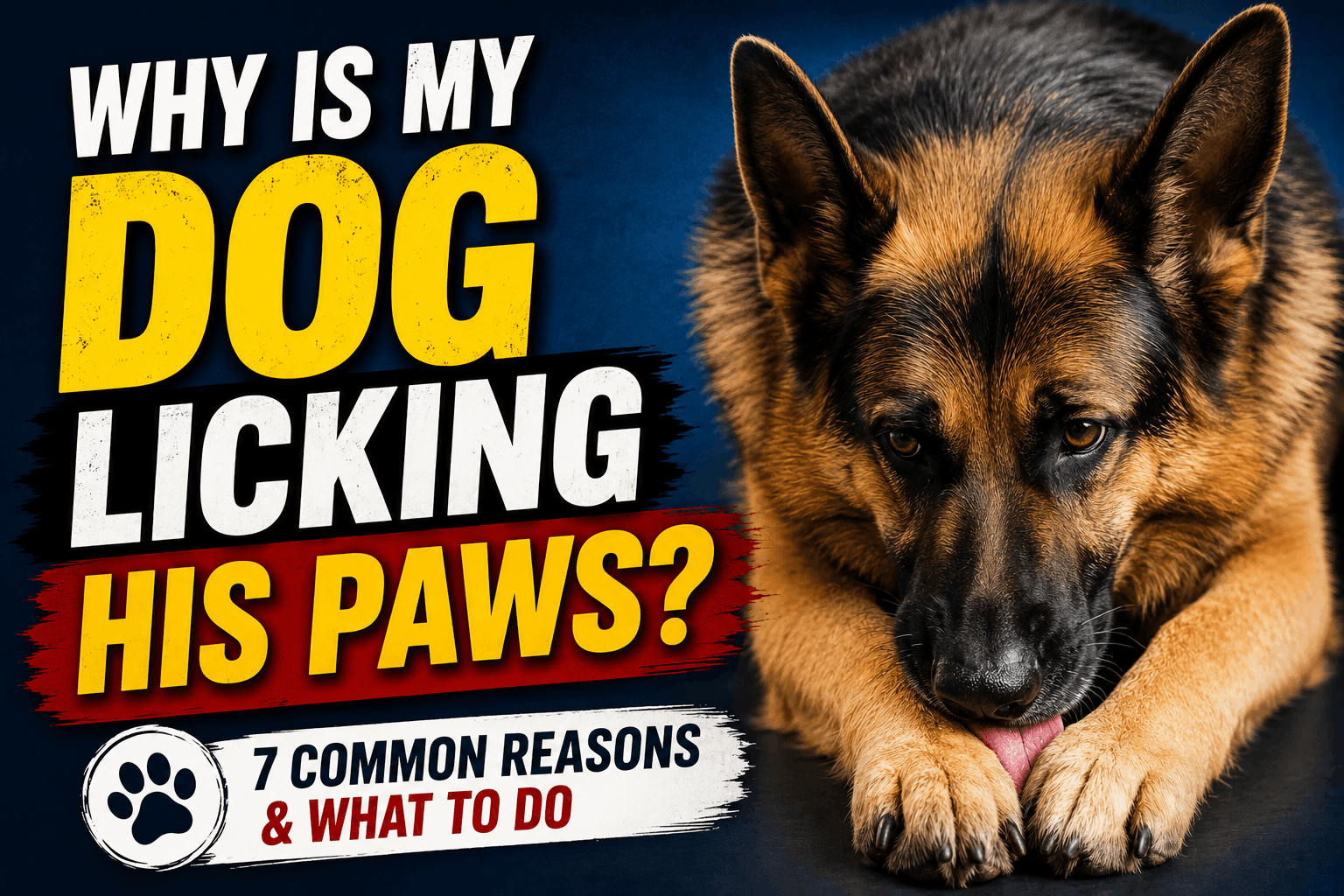
The important thing is not to panic, but also not to ignore it when the behavior becomes frequent. If you are asking yourself, “Why is my dog licking his paws?”, understanding the possible reason is the first step toward helping them.
Here are seven common reasons your dog may keep licking his paws and what you can do about it.
1. Allergies
Allergies are one of the most common reasons dogs repeatedly lick or chew their paws. Environmental triggers such as grass, pollen, dust, or other substances may make the paws itchy. Some dogs may also have food-related sensitivities.
You may notice licking that affects more than one paw, along with scratching or irritated skin.
What to do: Keep track of when the licking happens and whether it appears during certain seasons or after specific activities. A veterinarian can help identify possible causes if the problem continues.
2. Something Is Stuck in the Paw
Dogs can easily pick up small stones, thorns, splinters, grass, or other debris while walking outside. When the problem is focused on one paw, this is one of the first things worth checking.
Look carefully between the toes, around the pads, and near the nails.
What to do: If you see loose dirt or a small piece of debris that can be safely removed, gently clean the paw and dry it. Do not dig deeply into the skin or try to remove something that is embedded. In that situation, contact a veterinarian.
3. Skin Irritation or Infection
Constant licking keeps the skin wet, and irritated skin can become even more uncomfortable over time. You may notice redness, swelling, an unusual smell, discharge, or dark staining on the fur between the toes.
In some cases, a skin problem or infection may be making your dog itch, while the licking makes the irritation worse.
What to do: Avoid using random creams, chemicals, or human medications on your dog’s paws. If you see significant redness, swelling, odor, or damaged skin, contact a veterinarian.
4. Parasites
Parasites can cause itching and skin irritation. Even if you do not immediately see a problem, persistent itching and licking should not be ignored.
Dogs may also scratch other parts of their body or show irritated skin.
What to do: Make sure your dog follows an appropriate parasite-prevention plan recommended by your veterinarian. If you suspect parasites, a proper examination can help determine the right treatment.
5. Pain or an Injury
Sometimes a dog licks a paw because it hurts. A small cut, torn nail, sting, cracked pad, or other injury may cause focused licking. Pain in a leg or joint can also sometimes lead a dog to repeatedly lick a particular area.
If your dog suddenly begins licking one paw and also limps or avoids putting weight on it, take the behavior seriously.
What to do: Check for visible injuries, but do not force your dog to let you handle a painful paw. Contact a veterinarian if your dog is limping, bleeding, showing obvious pain, or the problem does not improve.
6. Contact With an Irritating Substance
Sometimes a dog’s paws become irritated after contact with something outdoors or inside the home. Grass treatments, cleaning products, chemicals, or other substances may cause discomfort.
If the licking started soon after a walk or exposure to a new environment, think about what your dog may have stepped on.
What to do: Gently rinse the paws with clean water and dry them thoroughly if you suspect a mild surface irritant. If redness, pain, or swelling continues, seek veterinary advice.
7. Boredom or Stress
In some cases, repeated licking can become a behavioral habit connected to boredom or stress. However, it is important not to assume anxiety is the cause before considering possible medical reasons.
A dog with too little exercise or mental stimulation may develop repetitive behaviors, but persistent licking still deserves attention.
What to do: Make sure your dog has regular exercise, playtime, training, and mental enrichment appropriate for their age and needs. If medical causes have been ruled out and the behavior continues, a veterinarian or qualified behavior professional may help.
What Can I Do at Home?
Start with a simple inspection of your dog’s paws. Check for dirt, cuts, debris, swelling, or obvious irritation. After outdoor walks, gently clean and dry the paws when needed.
Most importantly, watch the pattern. Does your dog lick one paw or several? Does it happen after going outside? Is the behavior getting worse?
Avoid giving your dog human medications or applying treatments without professional guidance. The best solution depends on the underlying cause.
When Should You See a Veterinarian?
You should contact a veterinarian if your dog has:
-
Constant or worsening paw licking
-
Redness or swelling
-
Bleeding or damaged skin
-
A bad smell or discharge
-
Limping or signs of pain
-
Sudden intense licking of one paw
-
Licking that continues despite basic care
Final Thoughts
So, why is my dog licking his paws? The answer can be simple in some cases, but repeated licking may be your dog’s way of showing that something is uncomfortable.
Occasional paw licking can be normal. Constant licking is different. Take a few minutes to look for clues, pay attention to changes in your dog’s behavior, and do not ignore signs of pain or skin irritation.
Finding the real cause is the most important step. Once you understand why your dog is licking, you can make better decisions about what kind of help they need.
FAQs
Q1. Is it normal for dogs to lick their paws?
Occasional paw licking can be normal grooming behavior. However, frequent, intense, or repeated licking may point to an underlying problem such as itching, irritation, pain, or another health issue.
Q2. Why is my dog licking only one paw?
Licking one paw may suggest a local problem, such as a cut, thorn, splinter, nail injury, sting, or pain. Check the paw carefully and contact a veterinarian if you notice swelling, bleeding, limping, or persistent licking.
Q3. How can I stop my dog from licking his paws?
The best way to stop excessive licking is to identify and address the reason behind it. Check for obvious debris or injury, keep the paws clean and dry, and seek veterinary advice if the licking is frequent or causing skin damage.
What’s New
Best Dog Grooming Guide Tips for a Clean, Healthy & Happy Dog
Best Dog Food for Sensitive Stomachs: Ingredients to Choose & Avoid
Dog Training: 9 Simple Ways to Train Your Dog at Home