
Choosing senior dog food sounds easy until you are standing in the pet aisle, staring at 40 different bags that all promise to turn back the clock. My neighbor Linda knows that feeling well. Her 11-year-old beagle mix, Pepper, had always inhaled his dinner in about nine seconds. Then one winter, he started leaving half his bowl untouched. He also seemed a little slower on the stairs, and his waistline had quietly crept out.
Linda did what most of us do: she bought the bag with the gray-muzzled dog on the front and hoped for the best. A week later, Pepper had an upset stomach, and she was more confused than ever. Her vet gently explained that “senior” on a label does not mean the same thing from brand to brand. Here is everything Linda learned, in plain English.
What Is Senior Dog Food?
Senior dog food is a diet made for older dogs, whose bodies and routines change with age. Many are less active and burn fewer calories, so these foods often have fewer calories and less fat per serving. They also tend to include higher-quality protein sources and ingredients chosen for the health needs of aging dogs. justfoodfordogs
Here is the part most bags will not tell you: senior dog food is not technically a regulated food category the way adult or puppy food is, so formulas vary a lot. A food marketed for seniors may be lower in calories or higher in calories, depending on the brand. Always read the label instead of trusting the front of the bag. dogster
When Should You Switch to Senior Dog Food?
There is no magic birthday. There is no exact age at which every dog needs senior food. Some dogs never need to switch, while others may benefit as early as age 5. Large breeds tend to age faster than small ones, so they often need to switch earlier. A vet quoted in one guide suggests senior status generally begins around age 11, with large breeds probably switching one to two years sooner. dogsterfranklyinc
Instead of watching the calendar, watch your dog. Signs it may be time to talk to your vet include:
- Slowing down on walks or sleeping more
- Weight gain (or unexplained weight loss)
- Stiffness getting up or climbing stairs
- Changes in appetite or stool
- A duller coat or reduced interest in food
Because even dogs of the same breed age differently, your vet is the best person to decide. A quick checkup, including a look at body condition and basic bloodwork, will tell you far more than a number on a birthday card.
What to Look for in Senior Dog Food
Protein: Don’t Cut It Back
This is the biggest myth in senior nutrition. Many owners assume older dogs need less protein. The AKC points out that healthy seniors actually need more protein, not less, to maintain muscle. Senior formulas once had much lower protein because of fears about the kidneys, but veterinary thinking has shifted, and a good amount of protein is now seen as important. The exception is dogs with certain health conditions, such as kidney disease. In those cases, your vet may recommend an adjusted diet, so never change protein on your own. akcfranklyinc
Calories: Match the Food to the Dog
Calories in senior foods range widely, from about 246 to 408 per cup. That is a big difference. A less active dog that is gaining weight may do better on a lower-calorie formula. A senior dog that is losing weight may need more calories and highly digestible protein. This is why “senior” on the bag is only the starting point. akc
Helpful Extras
Many senior formulas add extra fiber, which can help dogs prone to constipation. Others include omega-3 fatty acids, antioxidants, and joint-support ingredients like glucosamine and chondroitin. These can be useful, but they are no substitute for good-quality main ingredients and a balanced formula. greymuzzle
Wet vs. Dry Senior Dog Food
Neither is automatically better. Dehydrated dogs and dogs with dental problems often do better with wet food, which has a higher water content and is usually lower in calories than dry. Dry food is convenient, often easier on the budget, and works well for many seniors. akc
If your dog is picky or has sore teeth, try adding warm water or a spoonful of wet food to kibble. Moisture softens dry food, making it easier for older dogs to chew and more appealing to eat. A mix of both is also perfectly fine for many dogs. purina
How to Switch to Senior Dog Food Safely
Linda’s mistake with Pepper was switching overnight. A fast change can upset the stomach and even make a dog suspicious of the new food. The recommendation is to take at least seven to 10 days to transition. franklyinc
Here is a simple schedule you can follow:
| Days | Old food | New senior dog food |
|---|---|---|
| 1 to 2 | 90% | 10% |
| 3 to 4 | 70% | 30% |
| 5 to 6 | 50% | 50% |
| 7 to 8 | 30% | 70% |
| 9 to 10 | 10% | 90% |
| 11 onward | 0% | 100% |
If your dog has loose stools or refuses to eat, slow things down and check in with your vet.
Mistakes to Avoid When Choosing Senior Dog Food
- Assuming all senior formulas are alike. Calories, protein, and fat vary widely.
- Cutting protein without a medical reason. Older dogs usually need good-quality protein to protect muscle.
- Ignoring weight changes. Both gain and loss matter, so weigh your dog regularly.
- Switching too fast. A gradual transition protects your dog’s digestion.
- Skipping the vet. Senior dogs can have hidden issues like kidney, heart, or dental problems that change what they should eat.
For a broader look at older-dog nutrition, the AKC’s guide on the nutritional needs of senior dogs and Dogster’s explainer on when to switch to senior dog food are both good follow-ups.
Simple Feeding Tips for Older Dogs
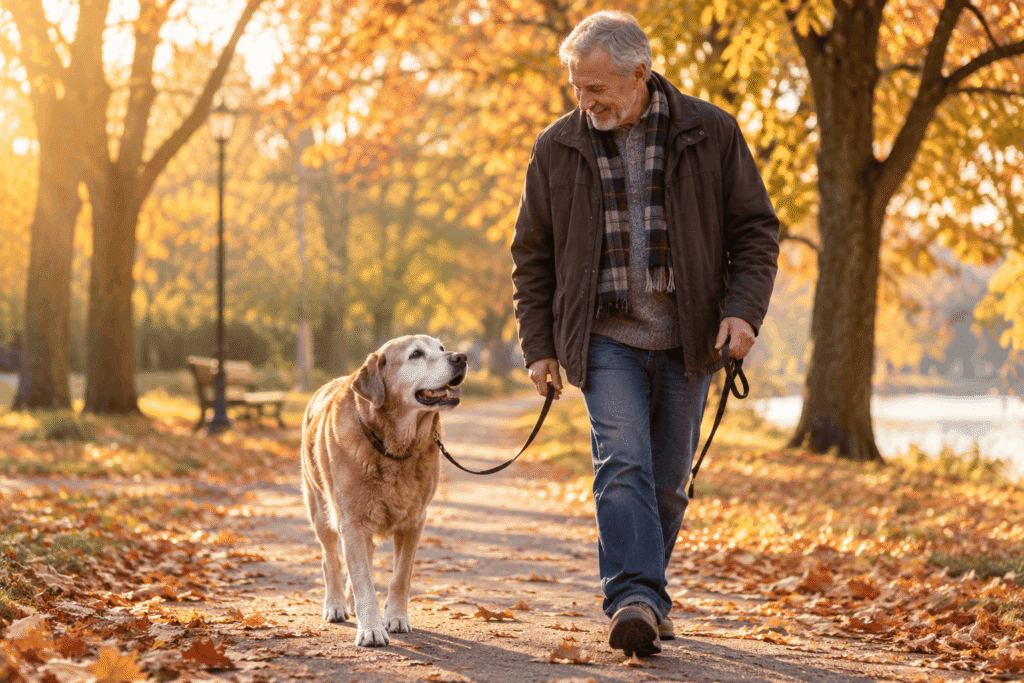
- Try smaller, more frequent meals. Smaller meals more often, served at room temperature or slightly warm, can help older dogs smell and taste their food better. petplan
- Keep fresh water available at all times. Hydration matters more as dogs age.
- Raise the bowl if your dog has stiff joints. It can make eating more comfortable.
- Weigh your dog monthly. Small changes are easier to fix early.
- Rule out medical causes first if your dog suddenly loses interest in food.
What Happened With Pepper?
Once Linda slowed down, things improved. Her vet checked Pepper’s weight and teeth, and they chose a senior formula with good-quality protein and a moderate number of calories. She switched him over about 10 days, adding a spoonful of warm water to the kibble to make it more appealing. Within a few weeks, Pepper was back to cleaning his bowl, and his energy on walks started to return. Linda told me the biggest surprise was how much the little details mattered: the slow transition, the smaller meals, and the vet visit she had been putting off.
Final Thoughts on Senior Dog Food
The best senior dog food is not the most expensive bag or the one with the prettiest label. It is the one that matches your dog’s weight, activity level, and health needs, and that your dog actually enjoys eating. Start with a vet visit, read the label carefully, switch slowly, and pay attention to how your dog responds. Small changes in your senior dog’s bowl can add up to more comfortable, happier years together.
FAQ
Q1. At what age should I switch to senior dog food?
There is no single age. Many dogs are considered seniors around 7 years, but large breeds may need to switch earlier and some dogs may not need senior food at all. Your vet can help you decide based on your dog’s health.
Q2. Do senior dogs need less protein?
Usually not. Healthy older dogs typically need good-quality protein to maintain muscle. Dogs with certain conditions, such as kidney disease, may need an adjusted diet, so talk to your vet before changing protein.
Q3. Is wet or dry senior dog food better?
Both can work well. Wet food is often easier to eat for dogs with dental issues and adds moisture, while dry food is convenient and affordable. Many owners use a mix of both.
Q4. How long should it take to switch to senior dog food?
Plan on at least 7 to 10 days, gradually increasing the new food while decreasing the old. A faster switch can upset your dog’s stomach.
Q5. What should I do if my senior dog stops eating?
See your veterinarian first, since loss of appetite can signal a medical problem. Once health issues are ruled out, adding warm water or a bit of wet food may make meals more appealing.
This article is for general information only and is not veterinary advice. Always consult your vet before changing your dog’s diet.
What’s New
Best Dog Grooming Guide Tips for a Clean, Healthy & Happy Dog
Dog Training: 9 Simple Ways to Train Your Dog at Home
Best Dog Food for Sensitive Stomachs: Ingredients to Choose & Avoid