
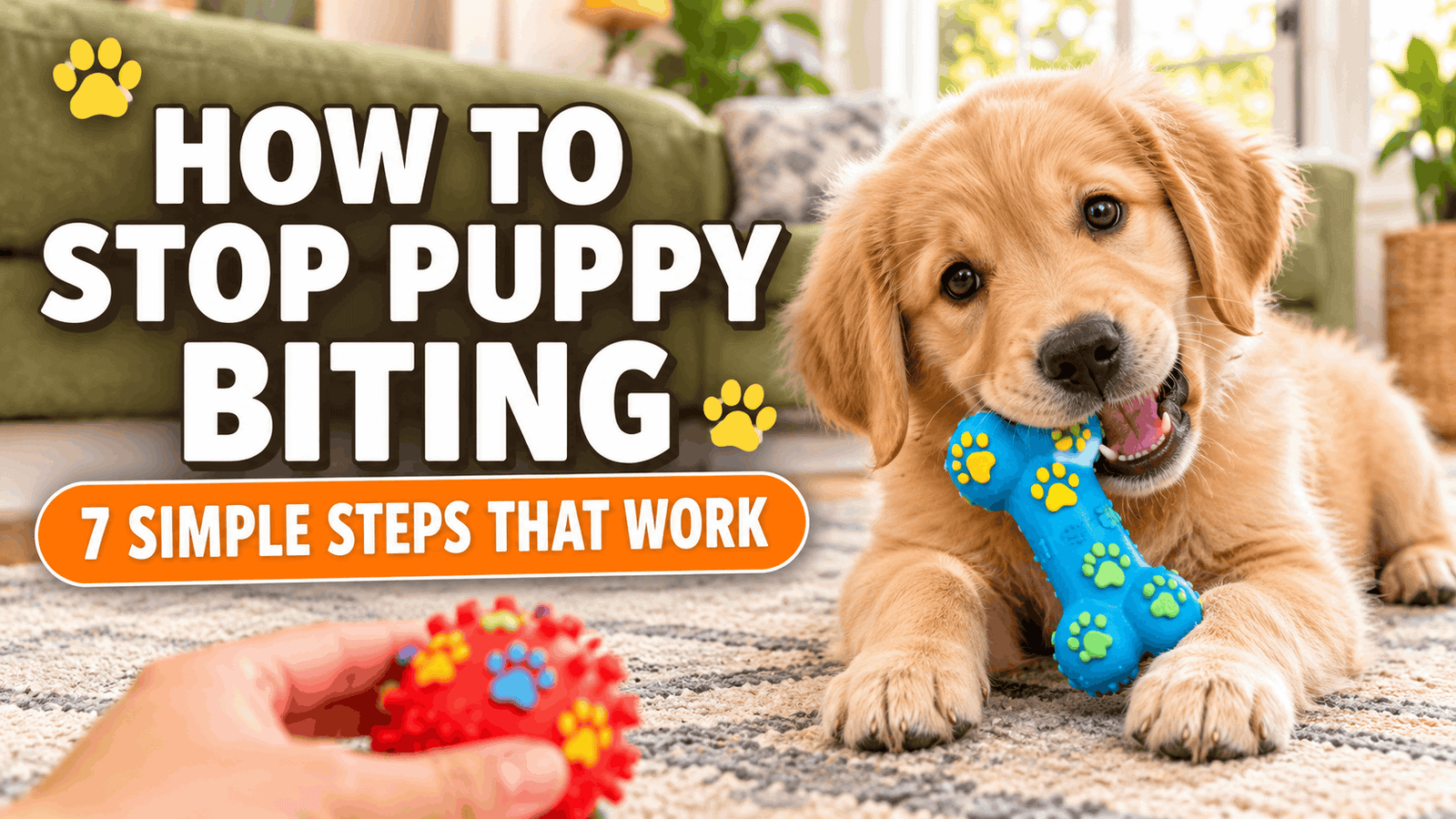
Learning how to stop puppy biting became my personal mission the day I visited my cousin Maya. Her new Golden Retriever puppy, Milo, greeted me at the door with a wagging tail, big brown eyes, and teeth that felt like tiny needles. Within ten minutes, he had shredded my sock, chewed my shoelace, and latched onto my sleeve like it was a prize. Maya just laughed tiredly and said, “He does this to everyone. I have the scratches to prove it.”
We spent the next few weeks testing what worked and what did not. Here is everything we learned, so your hands and ankles can survive puppyhood.
Is Puppy Biting Normal?
Yes, completely. Most of the time, puppy biting or nipping is part of the normal developmental process. Puppies explore the world with their mouths, play with each other by biting, and chew to soothe sore gums. It is not a sign of an aggressive or bad dog. pawshake
Your goal is not to crush the behavior. It is to teach bite inhibition, meaning a soft, careful mouth, and to redirect those needle teeth onto things your puppy is allowed to chew. it
Why Do Puppies Bite?
Puppies bite for a few simple reasons:
- Teething. It can take up to six months for puppies to finish teething, and during that time they can be extra mouthy. akc
- Play. Puppies learn how hard is too hard while wrestling with littermates.
- Overexcitement. When a lot is going on around them, many puppies get overwhelmed and nip at fast-moving hands or arms, and often just need quiet time or a nap. zoetispetcare
- Curiosity. Everything is new, and mouths are how puppies investigate.
How to Stop Puppy Biting in 7 Steps
1. Redirect to a Toy
This is the single most useful trick. Keep a chew toy within reach so you can swap it in for your hand or furniture, which shows your puppy what is okay to bite. The moment teeth touch skin, offer a toy, then praise your puppy when he takes it. akc
2. Say “Ouch” and Pause
To teach bite inhibition, say “ouch” or “yip” in a high-pitched voice whenever your puppy bites you. This mimics how littermates react to a bite that is too hard. Keep it calm and short, not scary. akc
3. End the Play Session
If the biting continues, the fun stops. If your puppy keeps nipping, stop the play session immediately. Stand up, turn away, or step behind a baby gate for 20 to 30 seconds. Then return and try again. Your puppy learns that teeth make the game disappear. akc
4. Never Use Your Hands as Toys
Wrestling with your hands teaches your puppy that skin is fair game. Never use your hands as toys. Use a tug rope or soft toy instead, and keep the toy between you and your puppy. it
5. Protect Naps and Burn Energy
An overtired puppy bites more, much like a cranky toddler. Most painful biting is an over-arousal problem, and once a puppy boils over, only rest will fix it. Short walks, gentle play, and plenty of naps make a huge difference. Maya noticed that Milo nipped the most around 6 p.m., so she started giving him a chew and a quiet crate nap beforehand. it
6. Soothe Sore Gums
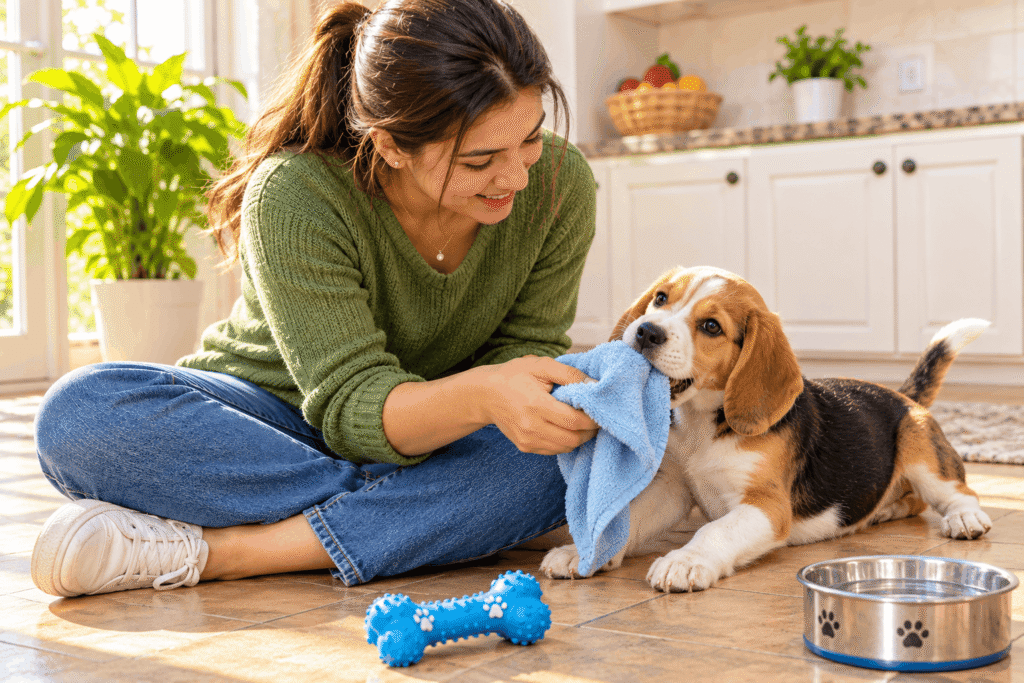
For teething puppies, offer safe rubber chews or a damp frozen washcloth to gnaw on. Always supervise, and avoid toys that break into chunks. Your puppy should not be able to chew chunks off or pull stuffing from his toys, and sticks can be hazardous. akc
7. Reward Gentle Behavior
Catch your puppy being good. When he licks instead of nips, or settles calmly in your lap, give praise and a small treat. Puppies repeat what pays off.
Mistakes to Avoid
- Hitting or scruffing. Harsh punishment can increase fear or aggression. petmd
- Yelling or holding the mouth shut. This can make biting worse or damage trust.
- Inconsistency. If one person allows mouthing and another does not, your puppy gets confused. Everyone in the house needs to follow the same rules.
- Expecting overnight results. If you are consistent, most dogs grow out of the biting phase once they have all their adult teeth, around seven months old. zoetispetcare
When to Get Professional Help
Most puppy biting is normal play or teething. But if your puppy growls, stiffens, snaps in fear, or bites hard when handled, talk to your vet or a certified trainer. The AKC also has helpful guides on how to stop puppy biting and puppy teething and nipping.
Final Thoughts on How to Stop Puppy Biting
Learning how to stop puppy biting takes patience, but it works. Redirect, pause, reward, and keep your puppy rested. A few weeks later, Milo greeted me at the door with a toy in his mouth instead of my sleeve, and Maya’s ankles are finally scratch-free. Your puppy will get there too.
FAQ
Q1. When do puppies stop biting?
Most puppies ease off around 6 to 7 months, once their adult teeth are in. Consistent training speeds this up.
Q2. Should I punish my puppy for biting?
No. Harsh punishment can create fear. Redirect to a toy and pause play instead.
Q3. Is puppy biting a sign of aggression?
Usually not. It is normal play and teething, but see a trainer if your puppy bites out of fear.
What’s New
Best Dog Grooming Guide Tips for a Clean, Healthy & Happy Dog
Best Dog Food for Sensitive Stomachs: Ingredients to Choose & Avoid
Dog Training: 9 Simple Ways to Train Your Dog at Home