
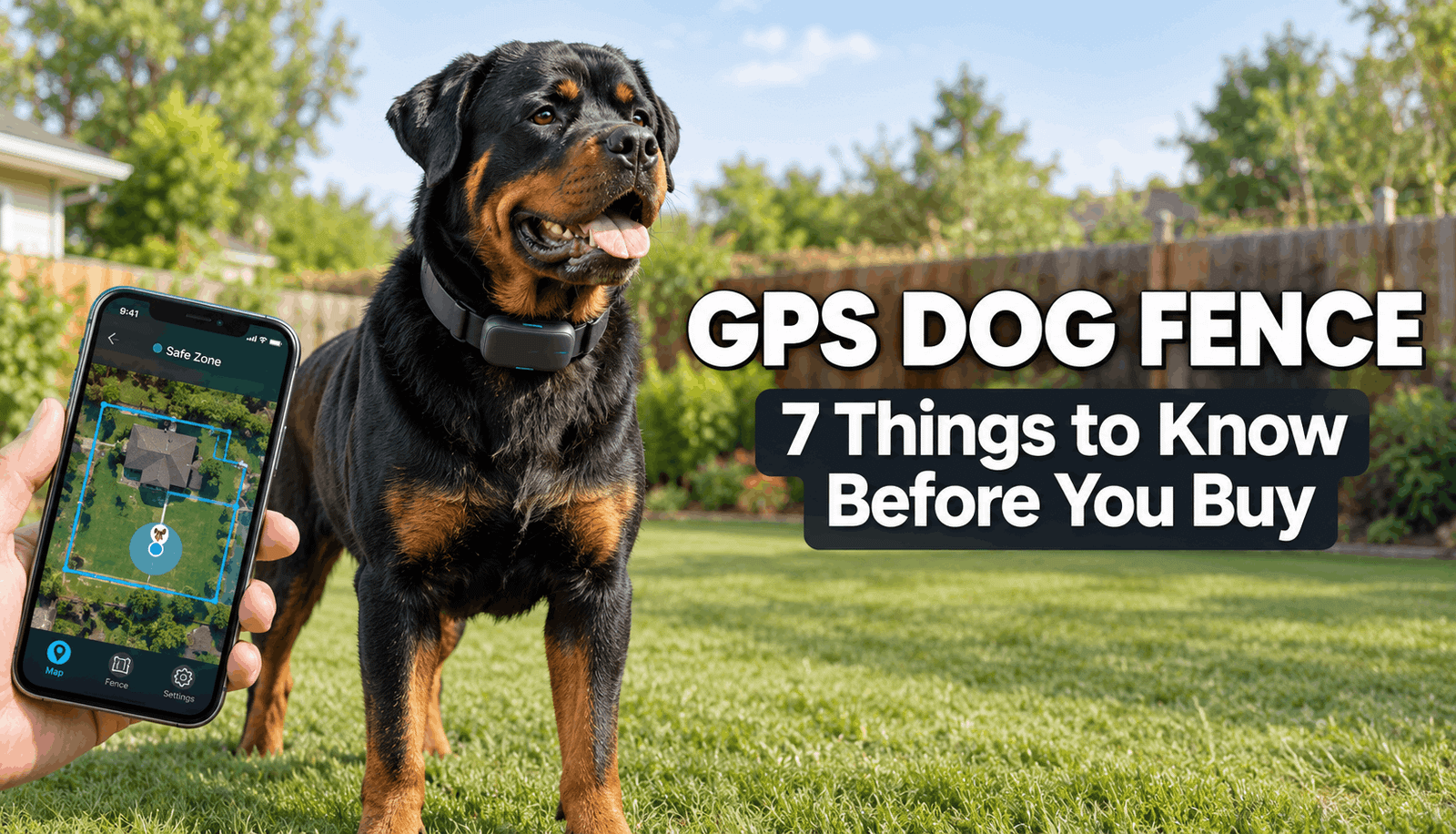
My neighbor has a Rottweiler named Max, a big, strong dog who used to test every fence she ever put up. She tried a chain-link fence first, and he found a gap at the bottom within a week. Then came an electric wire fence buried in the yard, which worked for a while until a storm knocked out the transmitter and nobody noticed for two days. The day Max wandered three streets over and a stranger had to call her using the number on his tag was the day she finally looked into a GPS Dog Fence instead.
That conversation stuck with me, mostly because I had no idea this kind of technology even existed for dogs. No digging, no buried wires, no walls to build. Just a collar and an app. So I looked into how it actually works, and here’s everything worth knowing before buying one.
What a GPS Dog Fence Actually Is
A GPS Dog Fence uses satellite signals, the same technology that powers your phone’s maps, to create an invisible boundary around a space you choose. Instead of digging a trench and burying a wire, you simply open an app on your phone and draw the boundary yourself, any shape, any size. The collar your dog wears constantly checks its position against that boundary, and it warns your dog with a sound or a vibration as he gets close to the edge.
This is different from a traditional wireless fence, which uses a plug-in base station to broadcast a signal in a fixed circle, usually covering just the yard around your house. A GPS Dog Fence has no such limit. You can take the collar with you to a relative’s house, a campsite, or a rental property, draw a brand new boundary in minutes, and your dog is contained there too.
Why People Are Switching to a GPS Dog Fence
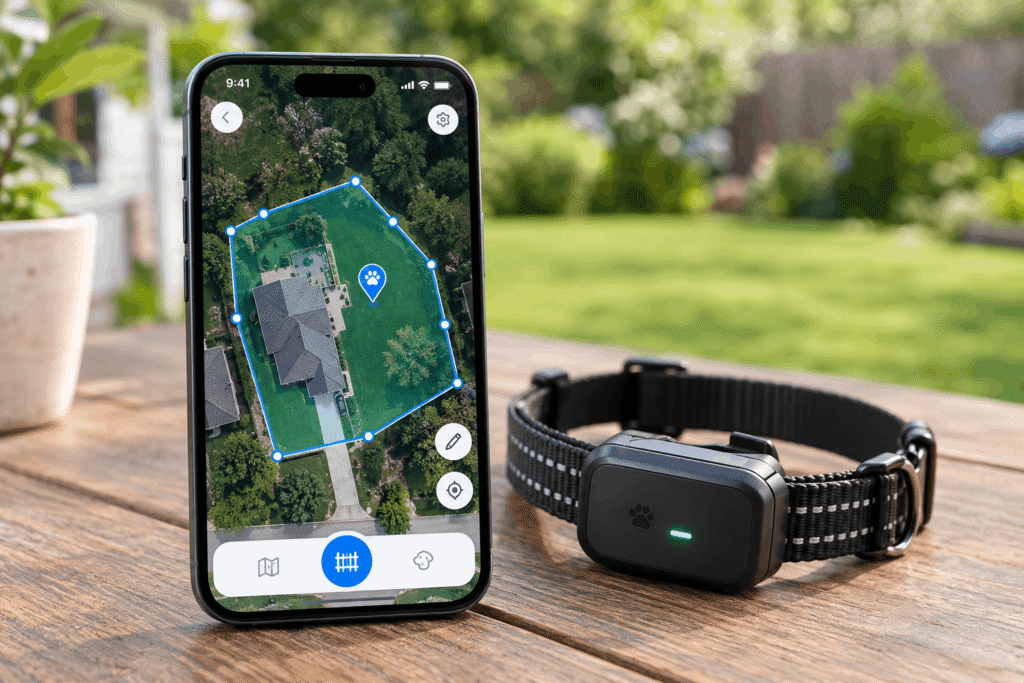
The biggest draw is flexibility. A buried wire fence is permanent and expensive to install, and it only protects the one property it’s buried in. A GPS Dog Fence travels with you. It also tends to work better on large, oddly shaped, or wooded properties, where a traditional circular wireless fence simply can’t match the terrain.
There’s a safety layer too. Most GPS fence collars double as trackers, so if your dog does slip past the boundary, you can see exactly where he went instead of just hoping he comes home.
A Few Popular Options Worth Knowing
SpotOn is one of the most talked-about names in this space, known for letting owners draw boundaries of nearly any size directly in the app, with technology designed to stay accurate even under heavy tree cover. Halo Collar takes a slightly different approach, pairing the fence with a built-in training system that uses tones and guided feedback to help a dog learn the boundary over time. For something simpler and subscription-free, PetSafe’s Guardian GPS fence offers basic virtual containment without ongoing monthly costs, though it skips live location tracking, which some owners don’t mind trading away for a lower price.
What a GPS Dog Fence Can’t Do
It’s worth being upfront about the limits. Most GPS fences need a GPS signal to function properly, so dense tree cover or certain terrain can occasionally affect accuracy, though premium systems have improved a lot here. Some models also require an active cellular connection for live tracking, even if the containment boundary itself still works offline. And a collar, no matter how smart, isn’t a substitute for supervision with a dog who’s never had any boundary training before.
Getting Your Dog Used to It
The transition matters more than the technology. Most systems start with a warning tone well before the actual boundary, giving your dog time to learn and turn back on his own before any correction kicks in. Dogs that are properly introduced to the tones rarely need the correction at all, since they learn to associate the sound with turning around. Patience in that first week or two makes a real difference in how well the whole system works long term.
FAQ
Q1. Does a GPS Dog Fence hurt my dog? Most systems start with a warning tone or vibration before any correction, and well-trained dogs typically learn to turn back at the tone alone, rarely reaching the correction stage.
Q2. Do I need a monthly subscription for a GPS Dog Fence? It depends on the brand. Some, like SpotOn and Halo, include live tracking features that may involve a subscription, while budget options like PetSafe Guardian skip tracking to avoid ongoing fees.
Q3. Can a GPS Dog Fence work without cell service? The core containment boundary on most systems still works without cellular coverage, but real-time location tracking on your phone usually requires it.
What’s New
Best Dog Grooming Guide Tips for a Clean, Healthy & Happy Dog
Best Dog Food for Sensitive Stomachs: Ingredients to Choose & Avoid
Dog Water Fountain: 7 Best Reasons Your Dog May Need One