

Finding the best dog breeds for families sounds simple until you actually try it. Last spring, my cousin Rachel and her husband sat their two kids down at the kitchen table and announced that the family was finally getting a dog. Her eight-year-old daughter cried happy tears. Her four-year-old son asked if the dog could sleep in his bed. Then came the hard part. Within a week, Rachel had a dozen browser tabs open, a long list of breeds, and more opinions from friends than she knew what to do with. One neighbor swore by Labradors. Another warned her off anything that shed. A sister-in-law shared a story about a beagle that ate an entire birthday cake off the counter.
When she called me to talk it over, I realized that most “best family dog” lists skip the part that matters most. The right family dog is not simply the cutest or the most popular. It is the one that fits your home, your schedule, and your kids. So here is a practical look at seven breeds that consistently do well with families, along with the honest trade-offs for each.
What Makes the Best Dog Breeds for Families?
The best dog breeds for families usually share a few traits: a patient temperament, a willingness to learn, a sturdy build, and a genuine enjoyment of being around people. Energy level matters just as much. A dog that needs hours of activity every day will struggle in a busy household that can only manage a short evening walk.
Size is part of the picture too. Large breeds are often gentle, but a big, excited dog can knock over a toddler without meaning any harm. Small breeds can be wonderful companions, but some are less tolerant of rough handling. And no breed comes with a guarantee. Individual personality, early socialization, and training shape a dog far more than a breed label ever will.
1. Labrador Retriever
The Labrador was recognized by the American Kennel Club in 1917, and the AKC reported that it was America’s most popular breed for 31 consecutive years. That kind of staying power comes from a friendly, even-tempered personality that fits easily into family life. Labs are eager to please, quick to learn, and happy to join in nearly any activity.
The trade-off is energy. Labs are athletic dogs that need daily exercise and plenty to do, and a bored young Lab can be a destructive one. They also shed and love food, so keep an eye on portions and plan on regular brushing.
2. Golden Retriever
Goldens are one of the most beloved breeds in the country, and it is easy to see why. Originally Scottish gundogs, they work as hunting partners, guide dogs, and search-and-rescue dogs, as described on the AKC Golden Retriever breed page. They bring the same warmth and enthusiasm home to their families, and they are intelligent, easy to train, and usually thrive on being included in everything.
Expect a lot of fur, since Goldens need regular brushing to keep their coat in shape. It is also worth choosing a breeder who performs health screenings, because large sporting breeds can be prone to joint problems and other inherited conditions.
3. Standard Poodle
Poodles are often overlooked as family dogs, which is a shame. They are widely regarded as one of the smartest breeds, very trainable, and athletic enough to keep up with active kids. Their curly coat sheds very little, which many families appreciate.
The catch is grooming. That coat needs professional trimming every few weeks, and Poodles do best with a family that enjoys training and play. Keep in mind that no dog is truly hypoallergenic, so if allergies are a concern, spend time with the breed before you commit.
4. Beagle
Beagles are compact, cheerful, and sturdy, which makes them a good match for kids who love being outside. They are social dogs that tend to enjoy company, including the company of other pets.
Their nose runs the show, though. A Beagle that catches an interesting scent may ignore everything else, so secure fencing and a leash on walks are essential. They can also be vocal, and a bored Beagle will let the whole neighborhood know about it.
5. Newfoundland
The Newfoundland has earned a reputation as a patient and watchful “nanny dog” for children, according to the AKC’s Newfoundland profile. Sweet-tempered and calm, these gentle giants are famously good companions, and a full-grown male can stand around 28 inches tall and weigh 130 to 150 pounds, as noted in these AKC facts about the Newfoundland.
That size comes with real-life considerations. Newfoundlands need plenty of room, they drool, and their thick coat requires regular care. They are a wonderful fit for families with space, time, and a high tolerance for fur and slobber.
6. Boxer
Boxers are loyal, affectionate, and playful, with a goofy streak that kids tend to love. The AKC Boxer page describes them as bright, alert, and sometimes silly, and they are natural guardians who genuinely love being around their people. That makes them a good match for active families with older children.
Their enthusiasm can be a lot for toddlers, since a bouncy Boxer may knock over a small child by accident. They need daily exercise but very little grooming. Because of their short faces, they can struggle in hot weather, so shade, water, and shorter outings matter in summer.
7. Bernese Mountain Dog
Bernese Mountain Dogs combine a calm, affectionate nature with a striking tricolor coat. They were bred as farm dogs in Switzerland and handle cold, snowy weather well, as covered in the AKC’s history of the Bernese Mountain Dog. They are usually good-natured, sociable, and happiest when they are close to their family.
The main downsides are a thick coat that sheds heavily and a lifespan that tends to be shorter than that of many other breeds. They also like cooler weather and need moderate daily exercise, so they are best suited to families who can plan around those needs.
How to Choose the Best Dog Breeds for Families in Your Home
Before falling for a breed, be honest about your daily routine. Think about how much time you have for walks and play, how much grooming you are willing to handle, and how much space you have. Also consider the ages of your children, since very young kids need constant supervision around any dog, no matter how gentle the breed.
Adoption deserves a look too. Many shelters and rescues have wonderful family dogs, including mixed breeds, and staff can often tell you how a particular dog behaves around children. If you want to see how popular each purebred is, the AKC’s most popular breeds list is a handy starting point.
A Quick Note on Safety
Even the friendliest dog needs boundaries. Teach children to be gentle, to avoid pulling ears or tails, and to leave a dog alone while he eats or sleeps. Never leave a young child alone with a dog, and give your dog a quiet space where he can retreat when he needs a break. Early socialization and basic training make a lasting difference in how well any dog fits into family life.
Final Thoughts on the Best Dog Breeds for Families
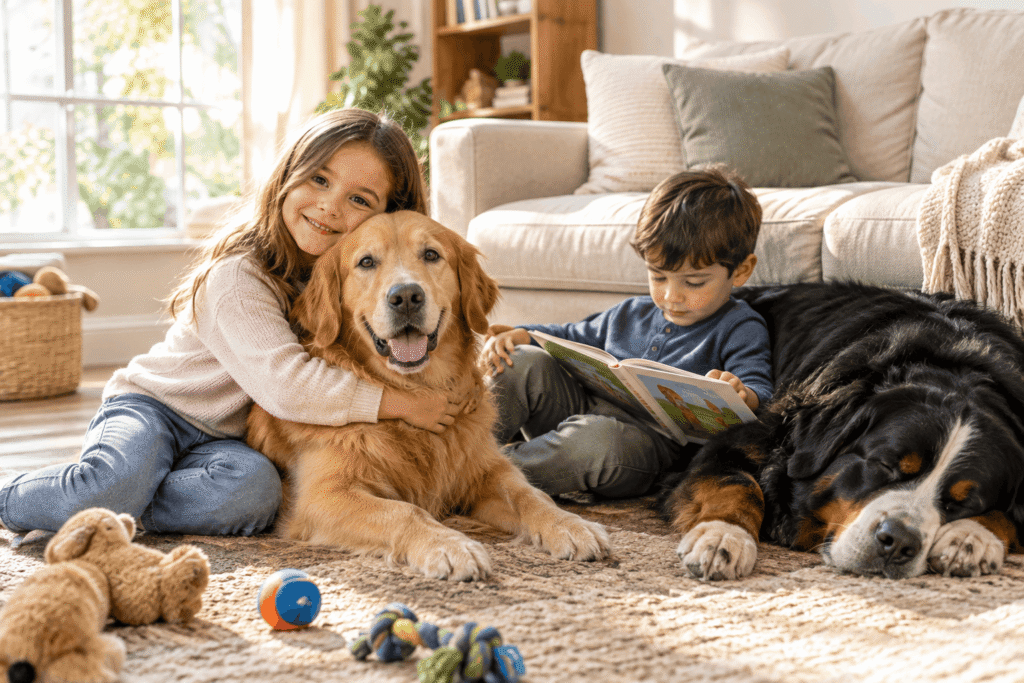
There is no single winner among the best dog breeds for families. A calm Newfoundland may be perfect for one household, while an active Beagle or Labrador suits another. Match the dog’s energy, size, and grooming needs to your real daily life, and you will end up with a companion your kids remember for decades.
FAQ
Q1. What are the best dog breeds for families with small children?
Golden Retrievers, Labrador Retrievers, and Newfoundlands are often recommended for their gentle and patient temperaments. Supervision still matters with any breed, and the individual dog’s personality is just as important as its breed.
Q2. Are small dogs good for families?
Some are, but it depends on the dog and the children’s ages. Small breeds can be more fragile and less tolerant of rough handling, so they often suit families with older kids who understand how to treat a dog gently.
Q3. Which family dog breeds shed the least?
Standard Poodles are a popular low-shedding choice. No dog is completely hypoallergenic, so if allergies are a concern, spend time with the breed before committing.
Q4. Is a puppy or an adult dog better for a family?
Puppies need a lot of time, training, and patience, while adult dogs often come with a more predictable temperament. Both can work well, depending on your family’s schedule and experience.
What’s New
Best Dog Grooming Guide Tips for a Clean, Healthy & Happy Dog
Best Dog Food for Sensitive Stomachs: Ingredients to Choose & Avoid
Dog Training: 9 Simple Ways to Train Your Dog at Home