

My wife brought our golden retriever home one weekend without much warning, just showed up at the door with this wiggly ball of fur and a grin on her face like she’d already made up her mind before asking me. He settled in fast, tail going nonstop, food bowl licked clean every time. But a few months in, right after we switched his food brand, his stomach started acting up out of nowhere, soft stools, more gas than usual, and he seemed a little off his usual energy for a few days straight. Our vet asked what had changed recently and casually mentioned that Dog Probiotics might help settle things down. I hadn’t even heard the term before that visit.
That conversation sent me down a research hole, and here’s everything worth knowing if you’re in the same spot I was.
Signs Your Dog Might Need Probiotics
Not every stomach hiccup means you need to run out and buy a supplement, but a few patterns are worth watching for, loose or inconsistent stools that stick around more than a couple of days, noticeably worse gas, recent antibiotic use, a diet or food brand change that hasn’t settled well, stress after boarding or travel, or skin and coat issues showing up alongside digestive symptoms. If your dog shows blood in the stool, repeated vomiting, sudden weight loss, or seems to be in pain, that’s a vet visit first, Dog Probiotics are a support tool, not a replacement for actual care.
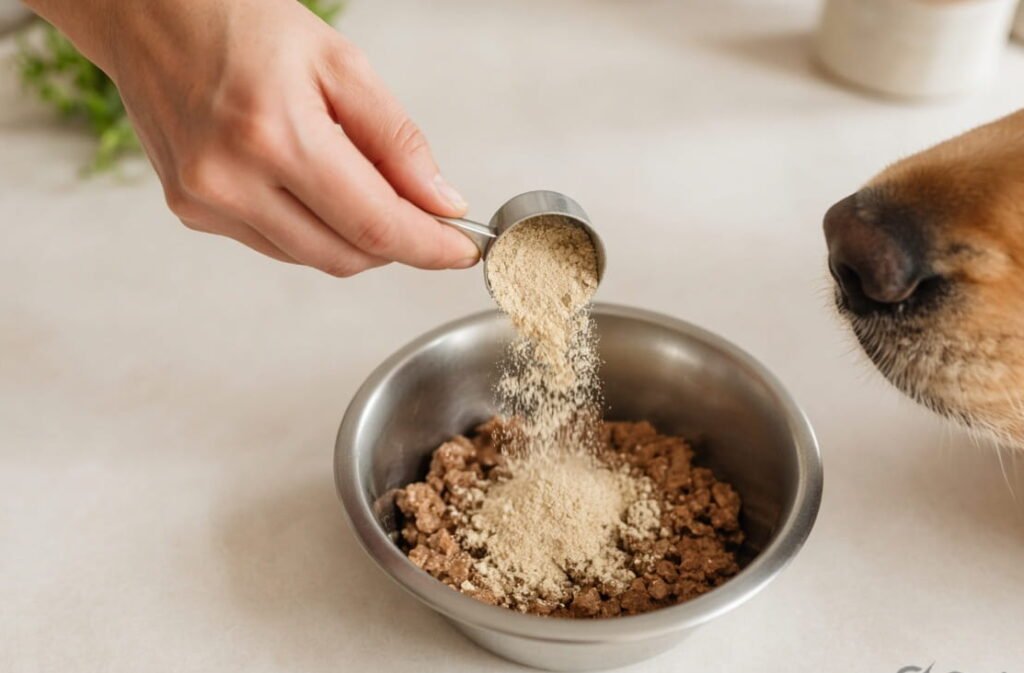
What Dog Probiotics Actually Do
Dog Probiotics are live, beneficial bacteria strains that help balance your dog’s gut microbiome, the same basic idea as human probiotics, just formulated for a dog’s digestive system. Around 70 percent of a dog’s immune system actually lives in the gut, so when that balance gets thrown off, it doesn’t just show up as tummy trouble, it can show up as low energy, itchy skin, or a weaker immune response overall. A good probiotic helps repopulate the gut with the right bacteria so digestion, stool quality, and even coat health can bounce back.
How to Choose the Right One
This is where most owners get stuck, since every bag and bottle claims to be the best. Start with the strains listed on the label, names like Bacillus subtilis, Lactobacillus acidophilus, Bifidobacterium species, and Enterococcus faecium show up often, and spore-forming strains generally survive stomach acid better to actually reach the gut. Next, check the CFU count, the colony-forming units per serving, products in the billions tend to work better than ones with vague or unlisted counts. Prebiotics matter too, ingredients like inulin or chicory root that feed the good bacteria once it arrives, a probiotic without prebiotic support is a bit like sending help without supplies. Look for brands that are transparent about third-party testing, that’s usually a decent signal they’re not cutting corners.
Format is more personal than scientific, chews work well for picky dogs, powders are easier to control dosage-wise. Neither is objectively better, it depends on what your dog will actually eat consistently.

A Brand Worth Knowing About
Purina Pro Plan FortiFlora is the name that comes up in vet clinics constantly. It uses a single, well-researched strain, Enterococcus faecium SF68, and it’s often the go-to for short-term help with occasional diarrhea. It’s not fancy, but it’s consistent, and that’s exactly why vets trust it. For broader daily support, multi-strain powders and chews combining Lactobacillus and Bifidobacterium species tend to work well for dogs with general GI sensitivity rather than a specific flare-up.
Common Mistakes and How Long It Actually Takes
Giving probiotics inconsistently is probably the biggest mistake, the gut needs a steady supply to actually rebalance, so skipping days undercuts the whole point. Some owners also stop the moment symptoms improve instead of finishing the recommended course, or assume doubling the dose speeds things up, when it can actually cause its own stomach upset. For general digestive support, most owners notice firmer stools and less gas within one to two weeks of consistent use, while stress or anxiety-related benefits can take four to six weeks.
Our golden retriever was back to his normal self within about ten days on a vet-recommended probiotic. Whether that was the supplement, time, or both, I honestly can’t say for certain, but I’m not stopping now that things are calm again.
FAQ
Q1. Are Dog Probiotics safe for daily use?
Yes, for most healthy dogs, daily probiotic use is considered safe and is often used as ongoing preventive support rather than a one-time fix. Always check with your vet if your dog has an existing medical condition.
Q2. Can I just give my dog human probiotics instead?
It’s better not to. Human probiotic strains aren’t always formulated for a dog’s digestive system, and dosing can be off. Dog Probiotics are specifically designed with strains and CFU counts suited to canine gut health.
Q3. How do I know if my dog actually needs probiotics?
Signs like loose stool, excess gas, recent antibiotic use, a diet change, or stress from travel or boarding are common reasons owners start Dog Probiotics. For ongoing or severe symptoms, talk to your vet before starting any supplement.
What’s New
Best Dog Grooming Guide Tips for a Clean, Healthy & Happy Dog
Dog Training: 9 Simple Ways to Train Your Dog at Home
Dog DNA Test Kit: Is It Worth Buying in 2026, Here’s the Real Answer