

I still remember the first time someone brought up a Dog DNA Test Kit around me, it was at a dog park, of all places. A woman was letting her dog off leash and someone asked, “what breed is he?” and she just laughed and said, “honestly, no clue, the shelter guessed lab mix, my vet thinks there’s some shepherd, my mom swears he looks like a husky.” Everyone had a theory. Nobody had an answer. She ended up ordering a kit that same week just to settle it once and for all.
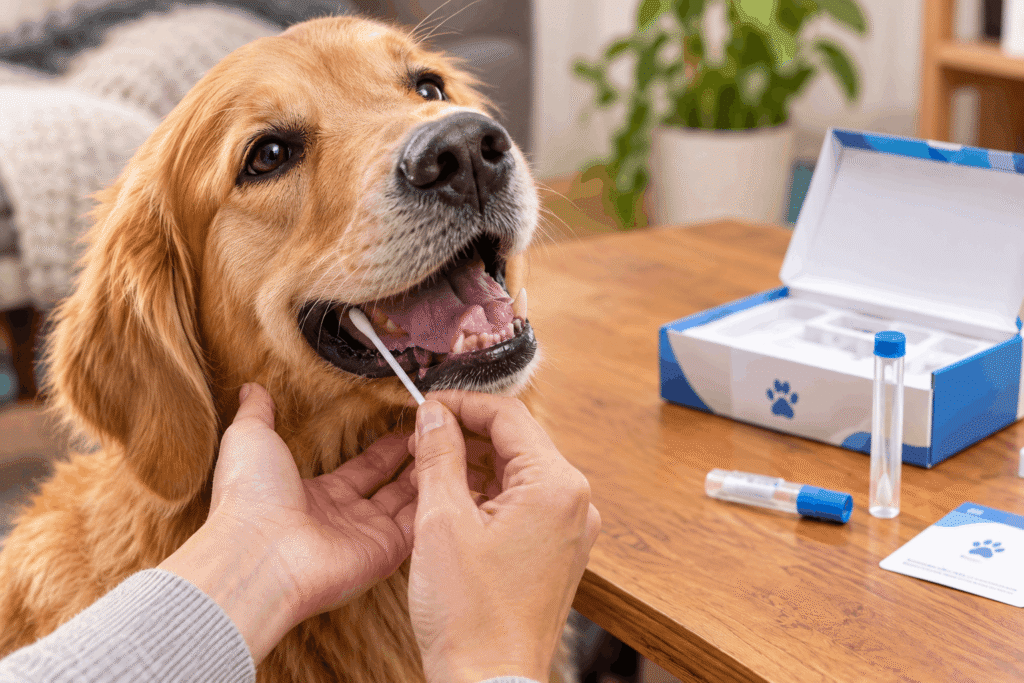
That’s basically how most people end up here. You adopt a dog, the paperwork says something vague, and curiosity eventually wins. A cheek swab and a few weeks of waiting later, you get an actual answer instead of five different guesses from five different people.
But is it actually worth spending the money on, and can you trust what the report tells you? Let’s get into it.
What a Dog DNA Test Kit Actually Tells You
At its core, a Dog DNA Test Kit works by comparing your dog’s genetic markers against a huge reference database of known breeds. The bigger and more detailed that database is, the sharper your results usually turn out to be. And it’s not just about breed anymore, most kits these days go further than that, screening for genetic health conditions, drug sensitivities, and even things like coat color or how big your dog is expected to get.
Two names keep showing up no matter where you look, Embark and Wisdom Panel. Both screen over 350 breeds, both report on 250-plus genetic health conditions, and independent reviewers generally back up their accuracy claims. The real differences show up in the smaller details, database size, extra perks, and of course, price.
How Accurate Is a Dog DNA Test Kit, Really
Here’s where people tend to swing too far in either direction, either treating it like gospel or dismissing it entirely. If your dog has one or two clear breeds in the mix, these kits are genuinely reliable. Where it gets murkier is with dogs who are a patchwork of five or six breeds at tiny percentages, the results can shift a bit and get harder to pin down exactly. Worth knowing too, breed databases keep growing every year, so a result from a couple of years back might read slightly differently if you retested today. That’s not the kit failing you, that’s just the science catching up.
Health Screening Is the Bigger Reason to Consider One
Breed curiosity is the fun part, sure, but honestly, the health screening is where the real value sits. A solid Dog DNA Test Kit can catch inherited conditions long before any symptoms show up, things like exercise-induced collapse, certain heart issues, or MDR1 drug sensitivity, which changes how a dog’s body reacts to specific medications. Knowing about something like that ahead of time gives you and your vet an actual head start instead of scrambling once a problem’s already there.
Choosing Between the Popular Kits
If a deep health panel and the widest breed database matter most to you, Wisdom Panel Premium currently covers more breeds than anything else on the consumer market, and it throws in a genetics consultation call once your results land. If you’re more interested in connecting with your dog’s relatives through a bigger matching network, Embark’s Breed and Health kit leans more research-driven, built in partnership with a veterinary university. And if you genuinely just want to know the breed mix without the health data, both brands sell cheaper, breed-only versions that skip the medical side entirely.
There are budget kits floating around too, just keep your expectations in check, a smaller database usually means a vaguer result, especially for dogs with a complicated family tree.
A Few Honest Limitations to Keep in Mind
A Dog DNA Test Kit isn’t a stand-in for an actual vet visit or bloodwork, it’s a screening tool, not a diagnosis. It also won’t tell you much about temperament in any reliable way, sure, a report might mention a breed known for high energy, but that doesn’t mean your particular dog fits the mold. And before you seal that swab and drop it in the mail, it’s worth skimming the company’s privacy policy, your dog’s genetic data has to live somewhere once it’s out of your hands.
FAQ
Q1. How long does it take to get results from a Dog DNA Test Kit?
Most kits take around two to four weeks once the lab receives your sample, though some budget options can run longer depending on demand.
Q2. Can a Dog DNA Test Kit really predict health problems?
It can flag genetic markers tied to certain inherited conditions, but it doesn’t guarantee your dog will or won’t actually develop it. Think of it as an early-warning tool to bring up at your next vet visit, not a diagnosis on its own.
Q3. Is a more expensive Dog DNA Test Kit always more accurate?
Not necessarily when it comes to breed identification, but pricier kits usually pack in a bigger breed database and a deeper health panel, which matters more if you’re planning to make medical decisions based on the results.
What’s New
Best Dog Grooming Guide Tips for a Clean, Healthy & Happy Dog
Best Dog Food for Sensitive Stomachs: Ingredients to Choose & Avoid
Dog Training: 9 Simple Ways to Train Your Dog at Home
1 thought on “Dog DNA Test Kit: Is It Worth Buying in 2026, Here’s the Real Answer”