

How to make homemade dog food never crossed my mind until a random conversation with a friend changed everything. If you have a golden retriever, you already know how this goes, they’re always hungry, no matter how much you feed them. Mine used to eat whatever I gave him in seconds flat and then just look at me like he was waiting for round two. And you already know how expensive market dog food has gotten, the dollars add up fast for something that lasts barely a day or two. One day I went to a friend’s place and saw him actually preparing food for his dog at home. I asked him why he doesn’t just buy from the market like everyone else, and he said he’s been making his dog’s food from scratch since day one, because that way he knows exactly how much protein is going into every meal. That one conversation stuck with me, and I started digging into how to make homemade dog food properly instead of just guessing.
Turns out there’s a right way to do this, and a wrong way that can actually leave your dog missing key nutrients over time. Here’s what I learned, broken down simply.
Why Some Owners Choose to Make Homemade Dog Food
A lot of owners switch to homemade meals because their dog has allergies, a sensitive stomach, or they simply want more control over what’s going into the bowl. It also helps you avoid fillers, preservatives, and the vague “meat by-product” labels you see on cheaper kibble bags. According to the American Kennel Club, homemade meals can be a great option, but they need to be carefully balanced since even well-intentioned recipes can lead to nutrient deficiencies without expert guidance. The catch is that homemade doesn’t automatically mean healthier, it only works if the meal is actually balanced.
Step 1: Talk to Your Vet First
Before changing anything, run it by your vet or a veterinary nutritionist. Every dog’s needs differ based on age, weight, breed, and health conditions, and a quick conversation can save you from accidentally creating a deficiency.
Step 2: Pick a Protein Source
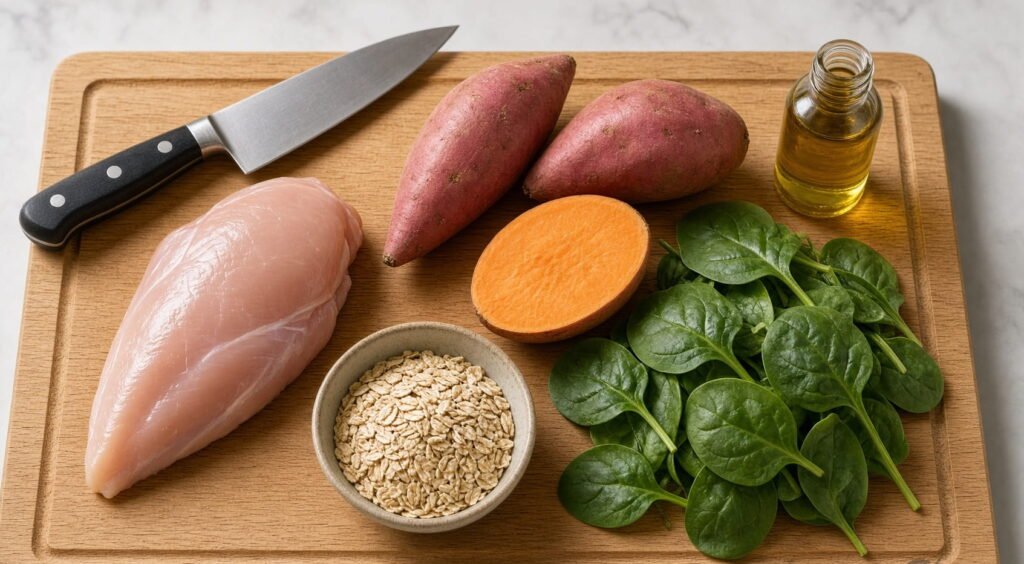
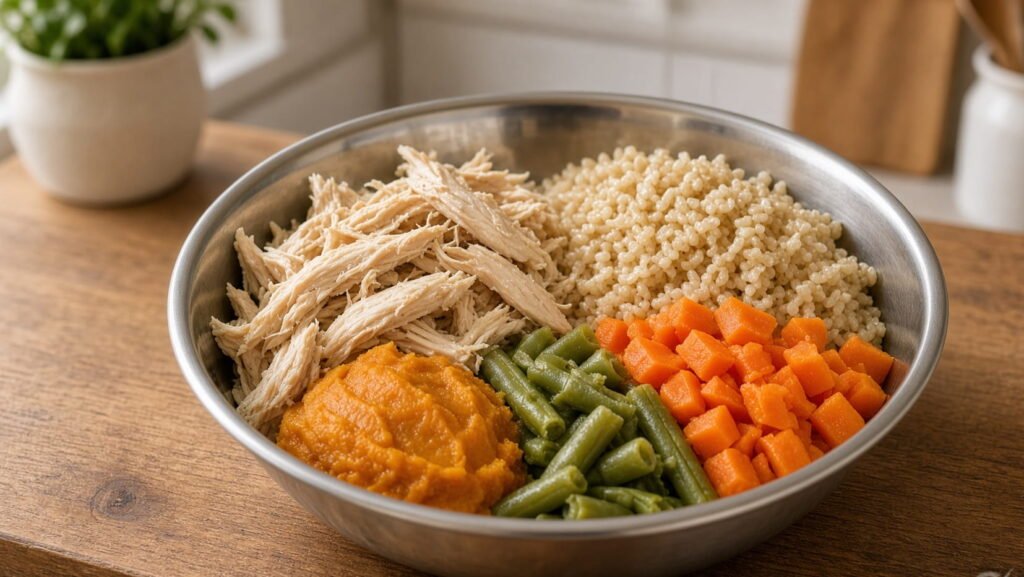
Lean meats like chicken breast, turkey, or lean beef work well. Cook it thoroughly, never serve raw unless you’re specifically following a vet-guided raw diet plan. Protein should make up roughly 40 to 50 percent of the meal.
Step 3: Add Safe Carbohydrates
Brown rice, sweet potatoes, or oats give your dog steady energy. These should make up around 25 to 30 percent of the plate. Avoid anything heavily processed or seasoned.
Step 4: Include Vegetables
Carrots, green beans, spinach, and pumpkin are all dog-safe and add fiber plus vitamins. Steam or lightly cook them so they’re easier to digest, and keep this portion around 20 percent of the meal.
Step 5: Don’t Skip the Fats and Supplements
A small amount of fish oil or flaxseed oil supports skin and coat health. Calcium is also important since homemade meals often lack it, a board-certified nutritionist through the American College of Veterinary Nutrition can help you figure out the right supplement or calcium source for your dog’s size and life stage.
Step 6: Avoid the Toxic List
Onions, garlic, grapes, raisins, chocolate, and xylitol are dangerous for dogs, even in small amounts. Always double check every ingredient before it goes into the pot.
Step 7: Store and Portion Properly
Cook in batches and refrigerate for up to four days, or freeze portions for longer storage. Portion sizes depend on your dog’s weight and activity level, so it’s worth asking your vet for a rough daily calorie target.
Is It Worth It to Make Homemade Dog Food?
Homemade food takes time, and it’s not always cheaper than kibble once you factor in ingredients and prep. But for a lot of owners, knowing exactly what’s going into their dog’s bowl makes it worth the extra effort. My dog, at least, hasn’t complained once.
FAQ
Q1. Is homemade dog food actually healthier than kibble?
Not automatically, it’s only healthier if the meal is nutritionally balanced. Poorly planned homemade meals can lead to deficiencies over time.
Q2. How often should I feed my dog homemade food?
Most adult dogs do well with two meals a day, but portion size and frequency should be based on your dog’s weight, age, and activity level.
Q3. Can I mix homemade food with regular kibble?
Yes, many owners do a mix, just make sure the combined meal still meets your dog’s daily nutritional needs, and check with your vet if you’re unsure.
What’s New
Best Dog Grooming Guide Tips for a Clean, Healthy & Happy Dog
Best Dog Food for Sensitive Stomachs: Ingredients to Choose & Avoid
Dog Training: 9 Simple Ways to Train Your Dog at Home