

Bone Broth for Dogs isn’t something most owners think about until their dog goes through a rough patch, an upset stomach that won’t settle, a picky phase where nothing in the bowl seems appealing, or a vet visit where the advice is simply “get some fluids and nutrients into him, keep it gentle.” That’s usually when someone mentions it for the first time, almost in passing, and it ends up being the thing that actually works when everything else felt like a guess.
It’s easy to be skeptical too. Bone broth has that slightly trendy, wellness-aisle reputation, the kind of thing that sounds more like a marketing label than an actual solution. But strip away the branding and look at what’s really in it, and there’s a genuine case for keeping it around, not as a miracle fix, but as a simple, low-risk way to support a dog’s gut, joints, and hydration. Here’s what it actually does, and how to make it properly at home.
What Bone Broth for Dogs Actually Is
Bone broth is made by slowly simmering animal bones, usually chicken, beef, or turkey, along with connective tissue, in water for an extended period, sometimes 12 to 48 hours. That long, gentle cooking time pulls out collagen, gelatin, amino acids like glycine and proline, and minerals such as calcium, magnesium, and phosphorus. The result is a rich, savory liquid dogs genuinely go wild for, which makes it useful not just as a supplement but as a way to make an unenthusiastic eater actually want their food.
The Real Benefits Worth Knowing About
Bone Broth for Dogs supports joint health, since the collagen and gelatin provide amino acids that help with cartilage repair and reduce inflammation, especially useful for senior dogs or ones dealing with arthritis. It also supports gut health in a meaningful way, the gelatin helps restore the intestinal lining, which matters for dogs with food sensitivities, leaky gut, or ongoing digestive issues. Beyond that, it’s a genuinely good hydration tool, a splash in the water bowl can encourage dogs who don’t drink enough on their own, and it’s gentle enough to offer during recovery from illness or an upset stomach when solid food isn’t appealing. Older dogs also tend to produce less collagen naturally over time, so bone broth can help support skin and coat health as that production slows down.
Is Bone Broth Good for Dogs, or Is There a Catch
The short answer is yes, but only when it’s actually made for dogs. This is the part people miss most often, broth made for humans, whether homemade or store-bought, frequently contains onion, garlic, heavy salt, or seasoning blends that are genuinely dangerous for dogs. Grabbing whatever’s on the grocery shelf and pouring it into your dog’s bowl is not the move here, it needs to be either dog-specific or made at home with dog-safe ingredients only.
How to Make Bone Broth for Dogs at Home
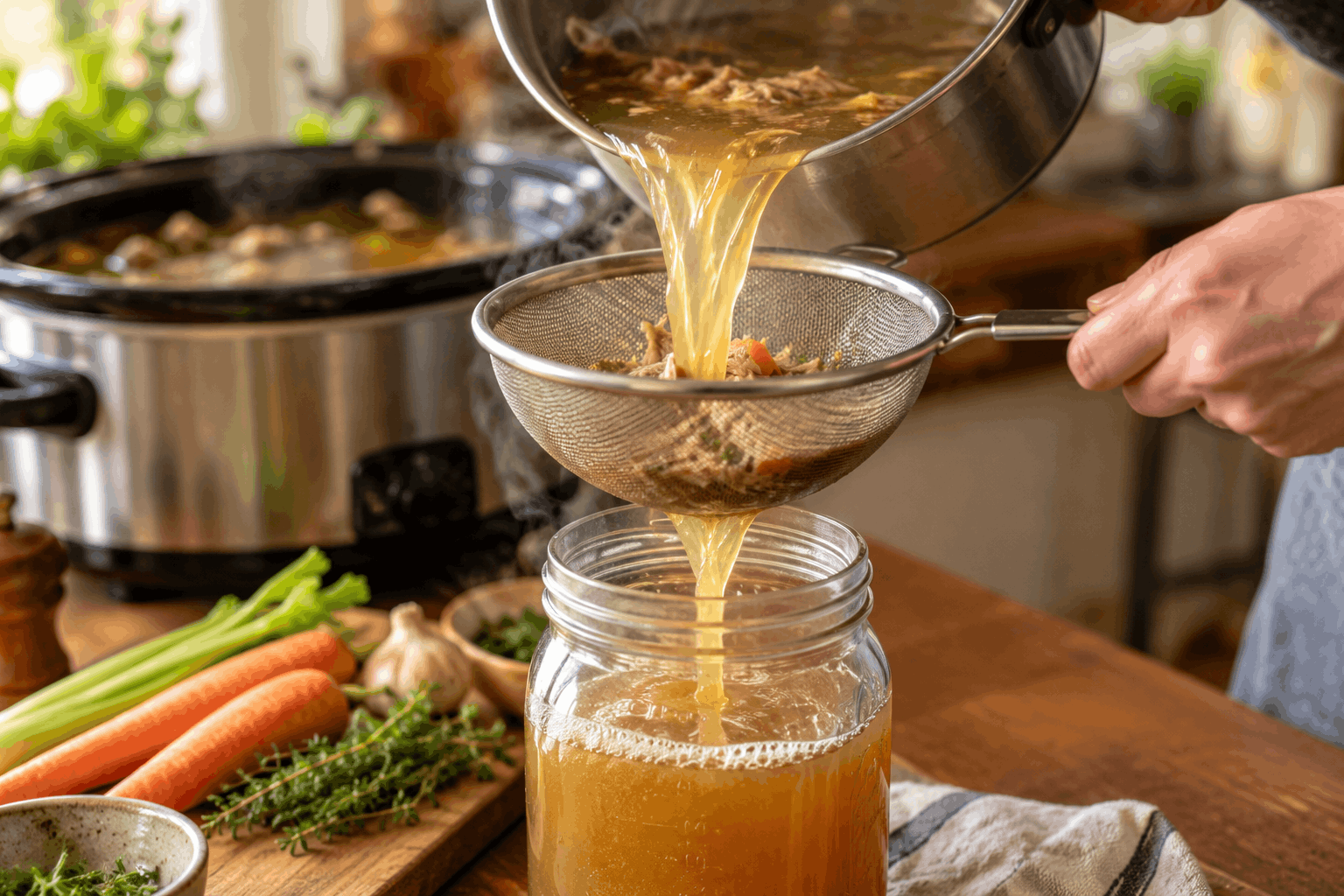
Making it yourself is simpler than it sounds. Place bones in a slow cooker and cover with water, adding a small splash of apple cider vinegar, which helps draw minerals out of the bones during cooking. Skip the salt, onions, garlic, and any seasoning blends entirely. Let it simmer on low for several hours, a gentle simmer rather than a rolling boil helps the collagen and gelatin extract properly. Once it’s done, strain out and discard all the bones and solids, never give your dog the actual cooked bones, since they can splinter and become a choking or internal injury risk. Let the broth cool, skim off excess fat from the top, and store it in the fridge for a few days or freeze it in small portions for later.
How Much to Give and How Often
Start small to see how your dog’s stomach handles it, then work up gradually. A general guideline some vets use is around one ounce per fifteen pounds of body weight, so a 45-pound dog might get about three ounces daily. Bone Broth for Dogs works best as an addition to a complete, balanced diet, not a replacement for regular meals, think of it as a topper or treat rather than a meal on its own.
FAQ
Q1. Can puppies have Bone Broth for Dogs?
Generally yes, in small amounts, but check with your vet first, especially for very young puppies or those with existing health conditions.
Q2. Can I use store-bought broth instead of making my own?
Only if it’s made specifically for dogs and has no onion, garlic, or added salt. Regular human broth is not safe to use.
Q3. How long can homemade bone broth be stored?
It keeps in the refrigerator for a few days or can be frozen in small portions for longer storage, just thaw and warm gently before serving.
What’s New
Best Dog Grooming Guide Tips for a Clean, Healthy & Happy Dog
Best Dog Food for Sensitive Stomachs: Ingredients to Choose & Avoid
Dog Training: 9 Simple Ways to Train Your Dog at Home