
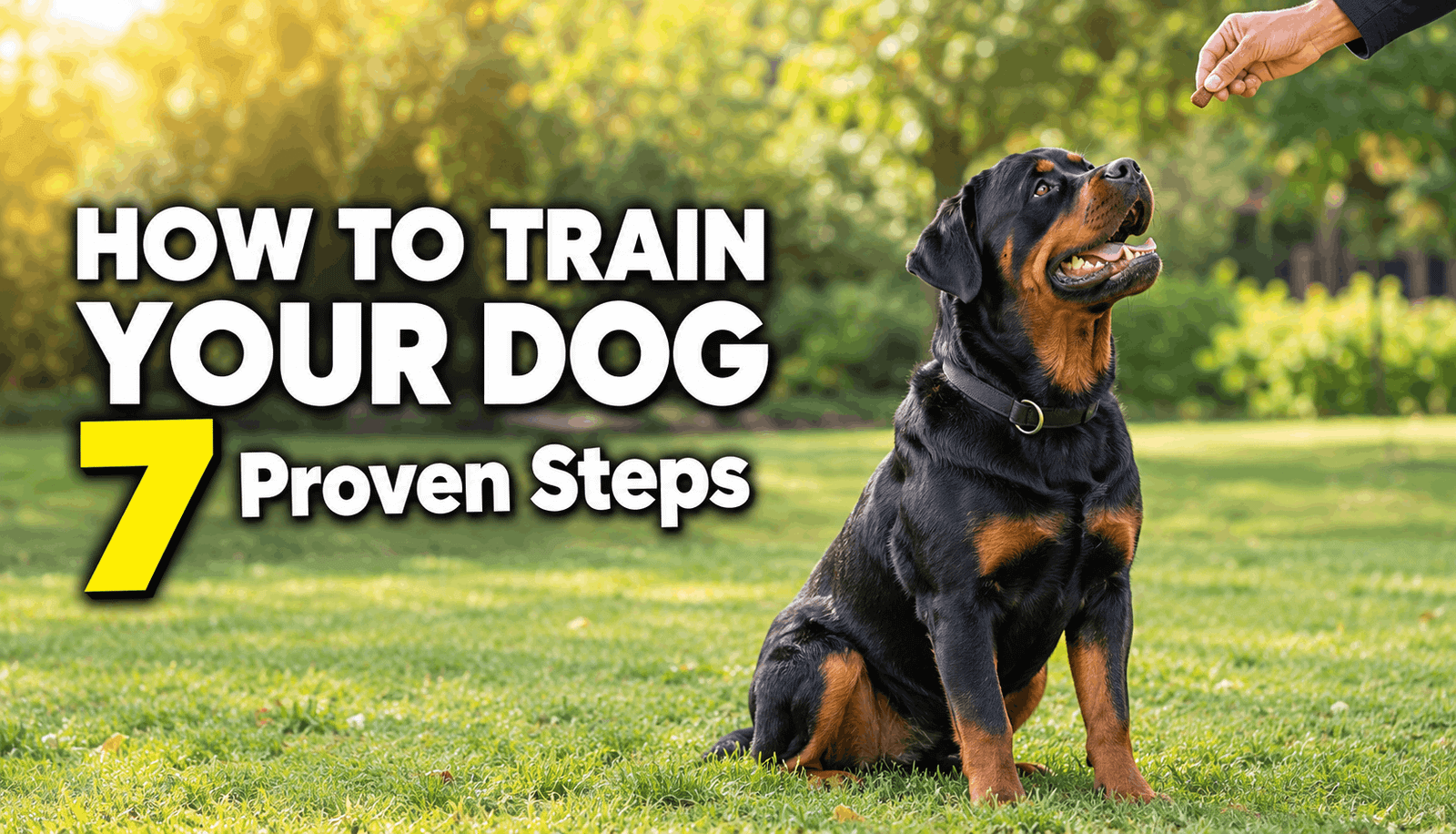
How to train your dog is a question most of us Google only after something goes wrong. For me it was a Husky, and it was the day he slipped through a half-open front door and took off down the street like the whole neighborhood was his personal racetrack. I stood there yelling his name while he glanced back once, clearly enjoying himself, and kept running. My heart was pounding. He came back eventually, but that scare taught me something: a dog who doesn’t respond to you isn’t being stubborn, he just was never taught.
If you’re starting from zero, or you have a dog who’s already picked up a few bad habits, this guide explains how to train your dog step by step, from the first “sit” to real-world reliability.
Why You Should Train Your Dog (And What Happens If You Don’t)
Training isn’t about making your dog obedient for show. It’s about safety, communication, and keeping him in your home for the long run.
According to the American Veterinary Society of Animal Behavior, behavior problems are the number one cause of relinquishment to shelters. The same statement notes that behavioral issues, not infectious disease, are the leading cause of death for dogs under three.
Untrained dogs usually don’t turn “bad” overnight. They chew, bolt, jump on guests, pull on the leash, or bark for hours, and the frustration slowly builds until an owner runs out of patience. Adolescence, roughly six to eighteen months, is when many dogs get surrendered, because the cute puppy suddenly has an adult body and no manners.
Step 1: Start Early and Socialize Properly
A puppy’s key socialization window closes around 14 to 16 weeks, so the clock starts the day you bring him home. Socialization doesn’t mean letting him rough-play with random dogs. It means safely introducing him to sounds, surfaces, people, and everyday chaos, like the delivery truck, the vacuum, and the vet’s table, while keeping things calm and rewarding.
Older dog? You can still train him. It just takes more patience.
Step 2: Set Up for Success
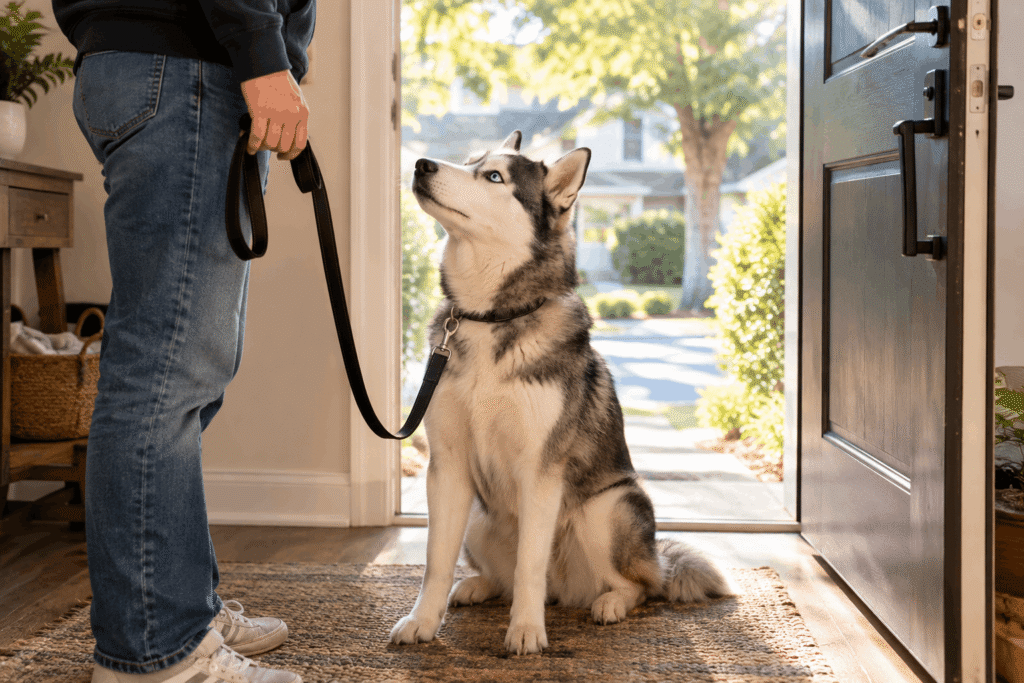
Pick a quiet spot with no distractions, and grab small, soft, high-value treats. Keep sessions short, five to ten minutes, and always end on a win.
Stick with reward-based methods. The AKC recommends positive reinforcement and advises against punishment like leash corrections or yelling, which can leave a dog confused about what you actually want.
Step 3: Teach the Big Five Commands
The AKC lists come, sit, down, stay, and walking nicely on a leash as the most important cues. Teach them in that spirit, one at a time.
- Sit: Hold a treat over his nose, move it back, and reward the moment his rear hits the floor.
- Down: From a sit, lower the treat to the ground and reward as he lies down.
- Stay: Ask for a sit, say “stay,” take one step, and reward. Add distance and time slowly.
- Come: Make it the best word in his life. Reward generously, never call him to scold him.
- Leash manners: Stop walking when he pulls, and move forward when the leash goes loose.
Step 4: Add “Leave It” and “Place”
“Leave it” can save your dog from swallowing something dangerous on a walk. “Place” teaches him to settle on a bed or mat, which is a lifesaver when guests arrive or dinner’s on the table.
Step 5: How to Train Your Dog Around Distractions
Here’s where most people stall. Your dog nails everything in the living room, then acts like he’s never heard of “sit” at the park. That’s normal. Dogs don’t generalize well.
Practice in the yard, then on a quiet street, then somewhere busier. Raise difficulty one notch at a time, and go back a level whenever he struggles.
Step 6: How to Train Your Dog Out of Problem Behaviors
Most habits come from unmet needs. Jumping is attention-seeking, so reward four paws on the floor. Barking often means boredom, so add exercise and puzzle toys. Chewing usually means he needs approved chew options. Fix the cause, not just the symptom.
Step 7: Go Pro with Advanced Training
Once the basics are reliable, the AKC’s advanced training options open up: off-leash reliability, scent work, agility, and other dog sports. A popular milestone is the AKC Canine Good Citizen test, a ten-item evaluation of everyday manners that can also lead toward therapy dog work.
Stuck on aggression, severe anxiety, or reactivity? That’s the moment to bring in a certified professional rather than struggling alone.
FAQ
Q1. What is the best age to start training a dog? Start the day your puppy comes home, focusing on socialization and simple cues. Adult dogs can learn too, just with a little more repetition.
Q2. How long should each training session be? Five to ten minutes is plenty. Short, upbeat sessions a few times a day beat one long, tiring one.
Q3. Can I train my dog at home without a professional? Yes, how to train your dog in basic obedience is very doable at home with treats and consistency. Bring in a certified trainer for aggression, severe fear, or anything that feels unsafe.
What’s New
Best Dog Grooming Guide Tips for a Clean, Healthy & Happy Dog
Best Dog Food for Sensitive Stomachs: Ingredients to Choose & Avoid
Dog Training: 9 Simple Ways to Train Your Dog at Home